
As people age, maintaining independence often becomes one of their most important health goals. The ability to stay active, manage daily activities, and enjoy a high quality of life can have a significant impact on overall well-being.
Fortunately, modern healthcare is placing greater emphasis on preventive medicine, healthy aging, and personalized care for older adults. This growing focus has increased interest in working with experienced geriatric doctors san antonio families trust to support long-term health and wellness.
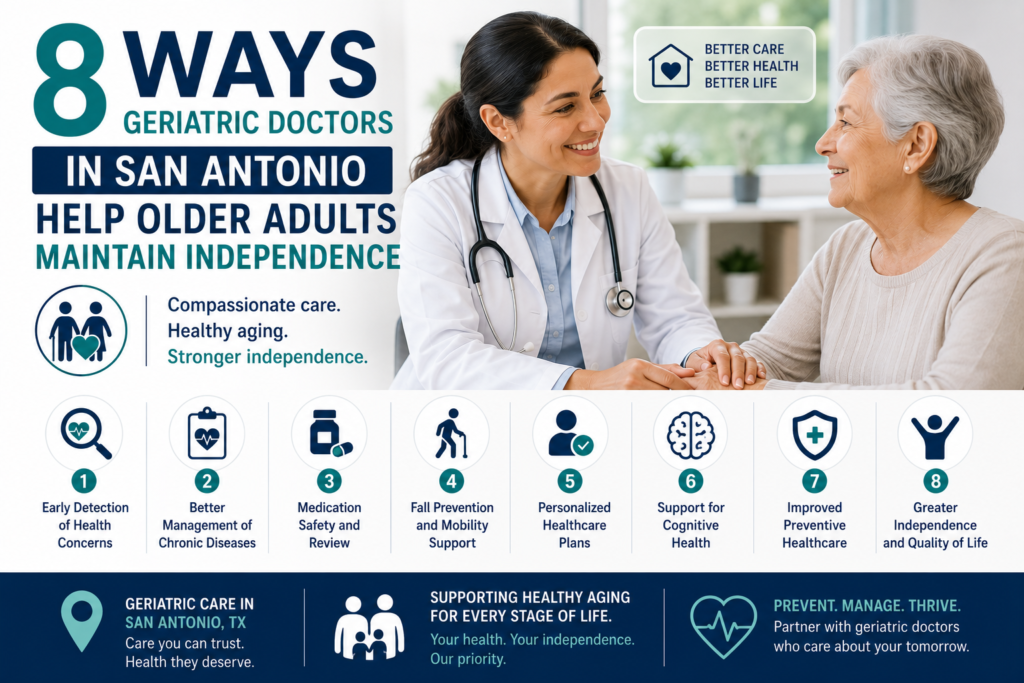
Geriatric care goes beyond treating illness. It focuses on helping older adults remain healthy, active, and independent for as long as possible. Here are eight ways geriatric care can support healthy aging and improve quality of life.
Why Geriatric Doctors in San Antonio Play an Important Role in Healthy Aging
Geriatric medicine is a specialized area of healthcare focused on the unique needs of older adults.
Many geriatric doctors san antonio patients rely on provide comprehensive care that may include:
- Preventive healthcare
- Chronic disease management
- Medication reviews
- Mobility assessments
- Cognitive health evaluations
- Wellness planning
- Fall prevention strategies
The goal is to help seniors maintain their health while addressing age-related concerns in a proactive and personalized manner.
1. Early Detection of Health Concerns
One of the most important benefits of geriatric care is early detection.
Many health conditions become more common with age, including:
- High blood pressure
- Diabetes
- Heart disease
- Osteoporosis
- Cognitive decline
Routine medical visits help identify risk factors and health concerns before they become more serious.
Early intervention often leads to better treatment outcomes and may help prevent future complications.
2. Better Management of Chronic Diseases
Chronic health conditions affect many older adults.
Common examples include:
- Diabetes
- Hypertension
- Arthritis
- Heart disease
- High cholesterol
Many families search for the best doctor for chronic disease management because ongoing monitoring is essential for maintaining long-term health.
Regular follow-up visits help healthcare providers:
- Monitor symptoms
- Adjust medications
- Track progress
- Reduce complication risks
Consistent care can improve both health outcomes and overall quality of life.
3. Medication Safety and Review
Many seniors take multiple medications prescribed by different healthcare providers.
Over time, this can increase the risk of:
- Medication interactions
- Side effects
- Duplicate prescriptions
- Missed doses
Geriatric physicians often perform medication reviews to ensure treatment plans remain safe and effective.
This process can help reduce unnecessary medications while improving treatment outcomes.
4. Fall Prevention and Mobility Support
Falls are a leading cause of injury among older adults.
Geriatric care often includes assessments designed to identify factors that may affect:
- Balance
- Mobility
- Strength
- Coordination
Healthcare providers may recommend:
- Exercise programs
- Physical therapy
- Home safety improvements
- Mobility aids when appropriate
Maintaining mobility is one of the most effective ways to preserve independence and reduce injury risk.
5. Personalized Healthcare Plans
No two patients age the same way.
Each person has unique:
- Medical history
- Lifestyle habits
- Family history
- Healthcare goals
A personalized approach allows healthcare providers to create treatment plans tailored to each individual’s needs.
This patient-centered model has become one of the most important trends in modern healthcare.
6. Support for Cognitive Health
Cognitive health is an important part of healthy aging.
Many seniors and family members have concerns about:
- Memory changes
- Focus
- Decision-making abilities
- Overall cognitive function
Routine evaluations can help identify concerns early and provide guidance on maintaining cognitive wellness.
Healthcare providers may also recommend lifestyle strategies that support brain health and overall well-being.
7. Improved Preventive Healthcare
Preventive healthcare plays a critical role in helping older adults remain healthy and active.
Preventive services may include:
- Wellness exams
- Health screenings
- Vaccinations
- Cardiovascular assessments
- Diabetes monitoring
A trusted primary care physician in san antonio tx patients rely on can help coordinate preventive care while ensuring healthcare plans align with long-term wellness goals.
Preventive medicine often helps reduce the risk of complications and supports healthier aging.
8. Greater Independence and Quality of Life
Perhaps the greatest benefit of geriatric care is preserving independence.
By addressing health concerns early and providing ongoing support, geriatric physicians help patients:
- Remain active
- Manage chronic conditions
- Reduce hospitalization risks
- Improve mobility
- Maintain confidence in daily activities
These benefits contribute to a higher quality of life and allow many seniors to remain independent for longer.
Why More Families Are Choosing Geriatric Care
Healthcare trends continue to shift toward prevention and long-term wellness.
More families recognize the value of working with geriatric doctors in san antonio healthcare providers recommend because they understand the unique challenges associated with aging.
Geriatric care focuses on:
- Personalized treatment
- Healthy aging
- Preventive medicine
- Chronic disease management
- Long-term wellness planning
This comprehensive approach helps older adults receive the support they need while maintaining dignity and independence.
When Should Someone Consider Seeing a Geriatric Doctor?
While every patient is different, many adults benefit from geriatric care when they:
- Manage multiple chronic conditions
- Take several medications
- Experience mobility challenges
- Need additional preventive care
- Want support for healthy aging
Early involvement often provides the greatest long-term benefits.
Frequently Asked Questions
What do geriatric doctors in San Antonio do?
Geriatric doctors specialize in caring for older adults by providing preventive care, chronic disease management, medication reviews, mobility assessments, and healthy aging support.
When should an older adult see a geriatric doctor?
Many seniors benefit from geriatric care when managing multiple medical conditions, taking several medications, or seeking specialized support for healthy aging.
What is the difference between a primary care physician and a geriatric doctor?
A primary care physician provides general healthcare for adults of all ages, while geriatric doctors focus specifically on the healthcare needs of older adults.
Can geriatric doctors manage chronic diseases?
Yes. Many geriatric doctors in san antonio patients trust help manage conditions such as diabetes, hypertension, arthritis, heart disease, and high cholesterol.
Why is preventive care important for seniors?
Preventive healthcare helps identify health concerns early, reduce complications, and support long-term wellness and independence.
How does geriatric care help maintain independence?
Geriatric care focuses on mobility, chronic disease management, medication safety, preventive care, and healthy aging strategies that help seniors remain active and independent.
Final Thoughts
Maintaining independence is one of the most important goals for many older adults. Through preventive care, personalized treatment plans, and ongoing health monitoring, geriatric medicine plays a valuable role in supporting healthy aging.
Working with experienced geriatric doctors in san antonio families trust can help seniors manage chronic conditions, improve mobility, and maintain a higher quality of life for years to come.
By prioritizing preventive healthcare and long-term wellness, older adults can take proactive steps toward healthier, more independent living.